

AI agents for marketing automation are goal-directed software systems that interpret context, plan next steps, use tools and take actions within defined permissions. In practice, they handle jobs like audience segmentation, email drafting and campaign reporting. Sounds fancy… but the idea is simple, and you don’t need an enterprise budget to understand it.
Definition: What AI Agents for Marketing Automation Are

An AI marketing agent is a goal-directed system that can interpret context, decide or plan next steps, use tools, and take actions within defined permissions and guardrails. CleverTap’s explainer adds that a capable agent can break a bigger goal into smaller tasks and adapt its approach instead of running the same fixed sequence every time. Some agents only recommend actions for a human to approve; others act on their own inside set boundaries.
In plain language: regular automation is a vending machine. Push B4, get chips. An agent is more like a junior assistant who hears “get more people to open our emails” and figures out the steps… while you keep the keys.
Takeaway: if a tool only follows a script you wrote, it’s automation. If it chooses the next step toward a goal, it’s an agent.
How AI Marketing Agents Work

The mechanics are less mysterious than the marketing around them. Google frames agents as a way to improve operational efficiency, which is the honest pitch: fewer hours on busywork. If you want the wider background first, see marketing automation AI: what it is and how it works.
The loop: goal, context, plan, action, review
- Goal. You set an outcome, like “tag new leads by interest.”
- Context. The agent reads what it’s allowed to see: signup source, clicks, past emails.
- Plan. It breaks the goal into tasks.
- Action. It uses tools, such as your autoresponder or CRM, within its permissions.
- Review. It checks results and adjusts the next run, or flags them for you.
That last step is the big difference. Fixed automation never looks back. It just repeats.
Worked example: one new lead, rules versus an agent
Example: assume 100 new leads come in this week, and each gets 3 follow-up emails.
The rule-based path. This is how a done-for-you funnel works. The Easy Commission Funnel gives beginners a prebuilt page, expert video content and automated follow-ups from day one. A lead opts in, lands in your own autoresponder, and receives the same follow-up sequence as everyone else. ECF also includes LeadsLeap integration for lead management and SendShark for broadcast emails. Predictable. Reliable. Every one of the 100 leads gets the same 3 emails, 300 sends in total.
The agent path. Now picture an agent doing the three tasks marketers most often hand off: segmentation, drafting and reporting.
- It reads each signup and splits the 100 leads into, say, three interest groups.
- It drafts a different version of email one for each group.
- After the sends, it reports which group opened and clicked, then suggests changes for email two.
| Step | Fixed automation | AI agent |
|---|---|---|
| New lead arrives | Added to one sequence | Read and segmented |
| Email content | Same for all 100 | Drafted per segment |
| After sending | Nothing changes | Reports and adjusts |
| Human role | Write once, set and forget | Approve, review, set limits |
Takeaway: rules give you a working system today. Agents add judgment on top, but only once a working system exists for them to improve.
Why It Matters: Three Use Cases
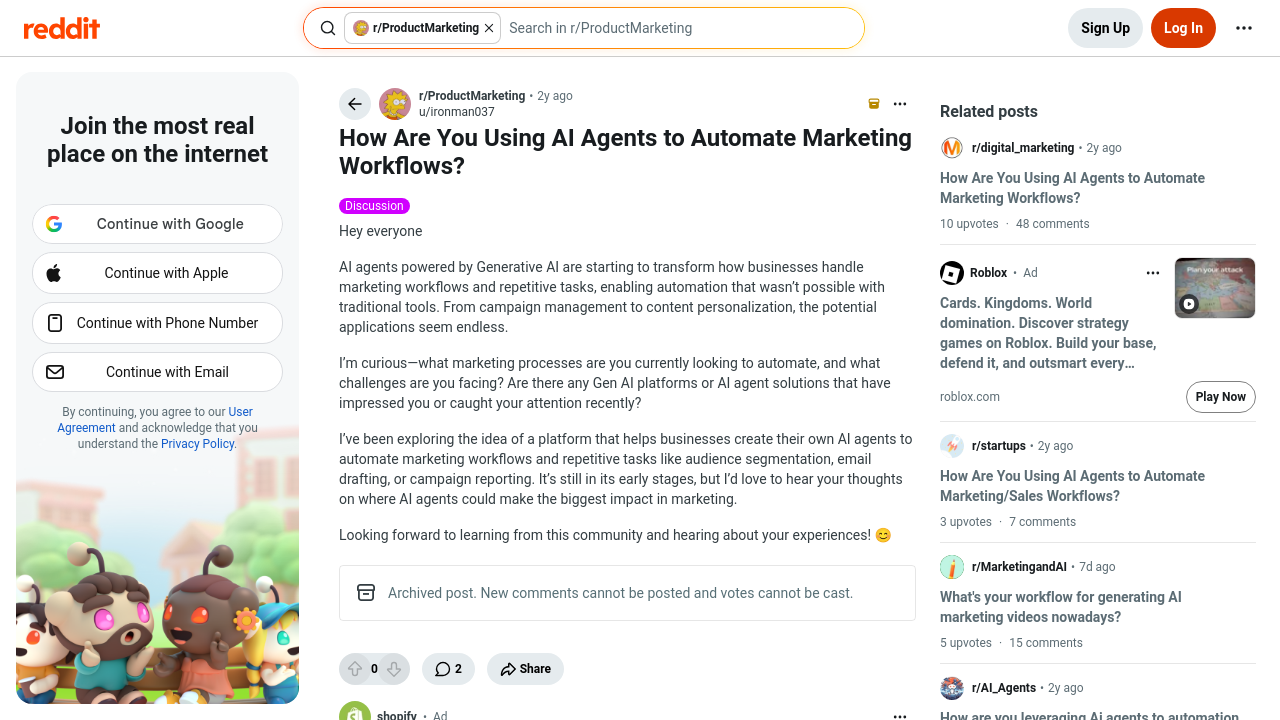
Vendors are pouring effort into this, and the use cases cluster around a few chores. Marketers in a Reddit product marketing discussion describe using agents for repetitive tasks like audience segmentation, email drafting and campaign reporting.
Audience segmentation
Sorting leads by interest is tedious by hand. CleverTap describes agents that analyze customer data and build segments. For an affiliate, that could mean separating people curious about lead generation from people who want quick commissions. Takeaway: better segments mean more relevant emails.
Email drafting
Atlassian positions its Rovo agents as AI-powered marketing assistants that plug into existing workflows, and that applies to Atlassian’s own tools only. The broader pattern: agents produce first drafts, humans edit. A draft still needs your voice, so learn the basics in email marketing for beginners. Takeaway: let agents write drafts, not final copy.
Campaign reporting and analytics
Domo’s agent store lists marketing agents that automate performance reporting and analyze customer journeys inside the Domo platform. For a small operator, the lesson is simple: an agent can summarize what worked so you stop guessing. Takeaway: reporting is the safest first job to hand an agent.
Common Misconceptions
Plenty of hype floats around this topic. Let’s clear a few things up.
Misconception: Agents replace your marketing team / Reality: they work within defined permissions
Agents act inside the limits you set. Many only recommend actions for approval. You still decide the offer, the message and the rules.
Misconception: You need an enterprise platform / Reality: beginners can start with prebuilt systems like ECF
You don’t need Domo or Salesforce to automate. ECF is a free, prebuilt affiliate system: you register, get a unique link and send people to it. The follow-ups are already built. If you’re brand new, how to start affiliate marketing with no money is a sensible next read.
Misconception: Automation means no list or strategy / Reality: you still own the list
New ECF leads are routed into your own autoresponder, so you build an independent list. Tools change. Your list stays yours. See how to master email list monetization for what to do with it.
Misconception: Agents and automation are the same thing / Reality: agents plan and decide
Automation repeats a sequence. An agent adapts its approach based on context. Same family, different jobs.
Takeaway: start with ownership and a working funnel, then add smarts.
Related Concepts
Marketing automation
Software that runs repeat marketing tasks on rules you set. For the beginner-friendly version, read what marketing automation AI is and how marketers use it.
Agentic personalization
Using agents to tailor messages to each person in real time, a theme CleverTap writes about directly.
Autoresponder
An email tool that sends messages automatically after someone subscribes. In ECF, new leads flow into your own autoresponder.
Sales funnel
The path from first click to purchase: page, opt-in, follow-ups, offer. ECF provides a prebuilt one. Building your own? Try how to start building sales funnels.
Workflow
A set of connected steps that complete a task. Agents can coordinate workflows instead of just running one step.
How to Get Started

Skip the shiny object stage. Do these instead:
- List one repetitive task. Weekly reporting or tagging leads. Just one.
- Set up a prebuilt funnel. The Easy Commission Funnel is free to register and built for beginners. For the bigger picture, see how to automate your online business from the ground up.
- Own your autoresponder list. Route leads somewhere you control.
- Try one tool with limited permissions. Let it recommend before it acts. Compare options in AI marketing automation tools for beginners.
Takeaway: one task, one funnel, one list, one tool. Then expand.
FAQ: Frequently Asked Questions
What is an AI agent in marketing?
It’s a goal-directed software system that interprets context, plans next steps, uses tools and takes actions within permissions you define. Typical jobs include segmenting audiences, drafting emails and summarizing campaign results for review.
How is an agent different from regular automation?
Regular automation follows the same predefined sequence every time. An agent adapts based on context, breaking a goal into tasks and choosing steps. Automation is the script; the agent decides which part to run.
What tasks can AI agents automate?
Marketers commonly hand agents repetitive work such as audience segmentation, email drafting and campaign reporting. Reporting is usually the lowest-risk starting point, because mistakes there don’t reach your subscribers’ inboxes directly or embarrassingly.
Do beginners need AI agents?
Not at first. Beginners get more from a working funnel, a list they own and consistent follow-ups. Once that system runs, an agent can help improve it. Without it, there’s nothing to optimize.
Can agents send emails on their own?
Some can, if you grant that permission. Others only draft or recommend and wait for approval. For beginners, keeping a human approval step is the safer setup until you trust the output quality.
Is Easy Commission Funnel free?
Yes. The Easy Commission Funnel is free to register. You get a unique link, a prebuilt page, expert video content and automated follow-ups, and new leads go into your own autoresponder from day one.
Do I still need my own email list?
Yes. Your list is the asset you control regardless of which tools come and go. ECF routes new leads into your own autoresponder specifically so you build an independent list over time.
Conclusion
AI agents are useful… but they’re the upgrade, not the foundation. Get a funnel running, own your list, then hand an agent one boring job. Jeff Aman, founder of the Easy Commission Funnel, states he has generated multiple six figures in affiliate commissions year after year. Ready to stop fiddling and start? Grab the free funnel at jeffaman.com and put your follow-ups on autopilot.