Email marketing is using email to attract, engage and communicate with potential and existing customers. For beginners, it works by collecting permission-based subscribers on a list you own, then sending them useful, single-purpose emails over time. That’s it. No secret handshake. Most guides bury that under forty steps… this one won’t.
What Is Email Marketing? A Plain-Language Definition
The American Marketing Association defines email marketing as a form of digital marketing that uses email to attract, engage and communicate with potential and existing customers. It can promote new products and discounts, or educate subscribers about what a business offers. Done right, it’s permission-based: you only email people who agreed to hear from you.
In plain language: you collect email addresses from people who asked to hear from you, then you send them stuff worth opening.
Here’s the analogy. Hoping for sales without a list is like fishing without a hook. You look busy on the dock. Nothing comes home with you. The list is the hook.
If you want more beginner context, the blog’s guide to email marketing for affiliate beginners goes deeper on the affiliate angle.
Takeaway: if you remember one word from this section, make it permission.
How Email Marketing Works, Step by Step
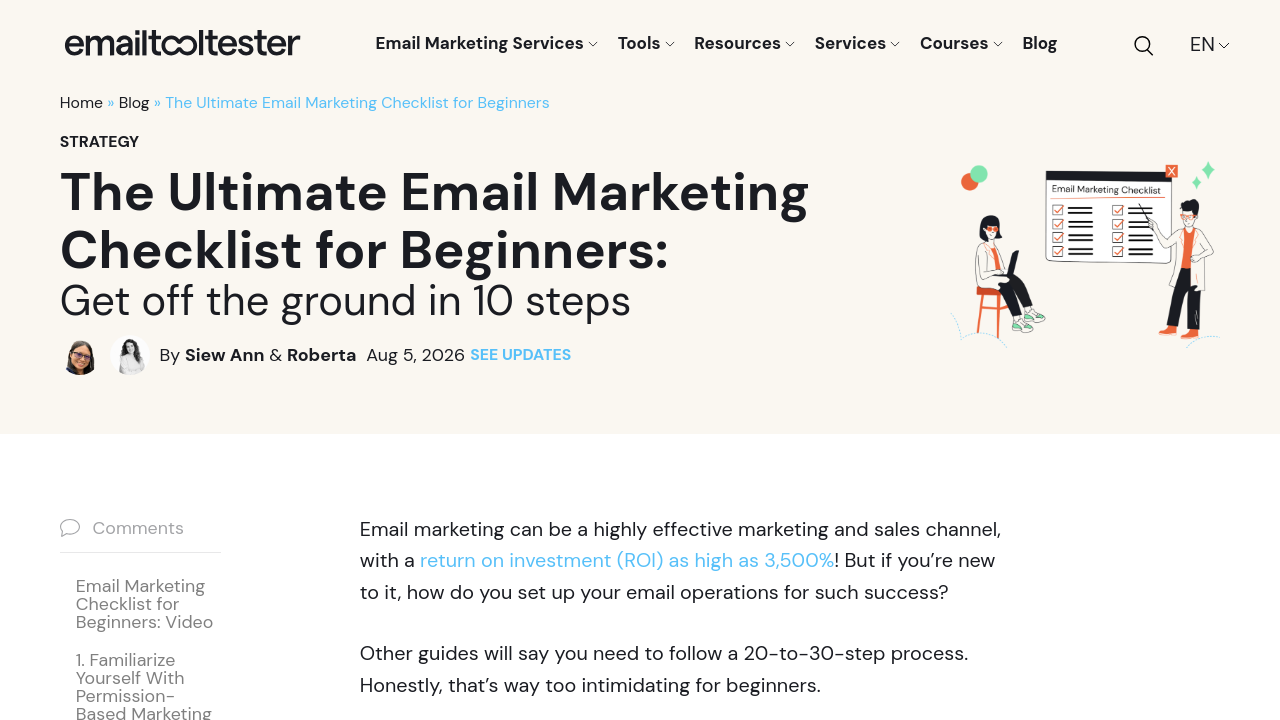
The checklist from Email Tool Tester lays out the beginner essentials. Here’s the short version:
- Put up an opt-in form. Visitors give you their email in exchange for something useful, and the form asks for clear consent.
- Pick an email service. You need a dedicated platform to store subscribers and send email, not your personal inbox.
- Set up and authenticate your sender address. This helps your emails land in inboxes instead of spam.
- Send a welcome email. New subscribers are at their warmest right after signing up.
- Follow one email, one purpose. A popular beginner tutorial on YouTube puts it bluntly: don’t cram several ideas and four different links into a single email.
The basic loop: capture, welcome, nurture, offer
Every list runs on the same loop:
- Capture: someone opts in.
- Welcome: they get a friendly first email that sets expectations.
- Nurture: you send helpful tips over the following days and weeks.
- Offer: once trust is there, you recommend something.
Skip nurture and jump to offer? That’s proposing on the first date. Awkward. The site’s guide to building an affiliate marketing funnel that converts shows how this loop plugs into a funnel.
A worked example: one lead through the Easy Commission Funnel
Theory’s nice. Let’s follow one lead. Say a reader named Sam wants to build a list without writing pages from scratch. Here’s the path through the Easy Commission Funnel (ECF):
- Sam registers free. ECF is free to register.
- Sam gets a unique link. ECF is a prebuilt affiliate system: you sign up, get your link, and send people to it.
- A lead clicks Sam’s link. They land on a prebuilt page with expert video content, part of the done-for-you funnel.
- Follow-ups go out automatically. The funnel includes automated follow-ups from day one, so Sam isn’t writing emails at midnight.
- The lead lands in Sam’s own autoresponder. New ECF leads are routed into the user’s own autoresponder, so Sam builds an independent list.
ECF also includes LeadsLeap integration for lead management and SendShark for broadcast emails. But step five is the big one. The list is Sam’s. Not rented. Owned.
Takeaway: whatever tool you use, make sure leads end up on a list you control.
Why Email Marketing Still Matters

Numbers time. Email is one of the oldest and biggest digital communication channels, and it is widely cited as a high-return marketing channel. Email Tool Tester cites an ROI as high as 3,500%. Not bad for a channel people keep calling dead.
Use case: owning your audience instead of renting it
A LinkedIn guide from Remote Resource makes the point well: social platforms change their rules all the time. One day thousands see your post, the next day nobody does. You don’t own followers. You do own a list. For the practical side of that, see how to build an email list for affiliate marketing.
Use case: turning a list into income
Jeff Aman, founder of ECF, says he left his full-time job within about a year of focusing on daily list building. He also states he has generated multiple six figures in affiliate commissions year after year and reached #1 on leaderboards across multiple platforms. Your results will depend on your effort, but the pattern is clear. Read up on earning passive income with email marketing, or the guide to making your first affiliate commission with email.
Use case: sales through history’s first commercial email
In 1978, Gary Thuerk at Digital Equipment Corp sent the first commercial email to 400 addresses announcing a new product, according to the AMA. It brought in about $13 million in sales. One email. Four hundred people. That’s the power of a direct line.
Takeaway: email gives you a channel no algorithm update can switch off.
Common Email Marketing Misconceptions
Misconception: Email is dead / Reality: it is still alive
People wake up and check email. Every morning. As the Remote Resource guide notes, email remains one of the best ways to grow a business, even while social feeds shift under your feet.
Misconception: More emails means more sales / Reality: one email, one purpose
Volume isn’t strategy. Each email should have one job and one main link. A clear ask beats a cluttered newsletter. The guide on writing an affiliate email template that sells shows that focus in practice.
Misconception: You can email anyone you find / Reality: permission comes first
Email Tool Tester explains that many providers ban unsolicited email in their terms and can suspend accounts that send it. Plus, people mark unwanted email as spam, which hurts deliverability for everyone on your list. Never buy a list.
Misconception: You need a big budget / Reality: you can start free
You don’t need a fat wallet. ECF is free to register and comes with a prebuilt system and unique link. See also starting affiliate marketing with no money.
Takeaway: most beginner mistakes come from skipping permission or overstuffing emails.
Related Email Marketing Concepts
Autoresponder
A tool that sends pre-written emails automatically when someone joins your list. In ECF, new leads route into your own autoresponder.
Broadcast email
A one-time email sent to your whole list, like a news update or promotion. ECF includes SendShark for broadcasts.
Opt-in / lead magnet
The opt-in is the moment someone subscribes. A lead magnet is the reason they do it, such as a short guide or a small incentive like a discount code.
Email list
Your database of subscribers who agreed to hear from you. It’s the asset everything else depends on.
Deliverability
How likely your emails are to reach the inbox instead of spam. Permission and sender authentication help it.
Permission-based marketing
Marketing only to people who gave consent. A lead magnet download alone doesn’t count as consent to marketing emails unless your form asks.
Want the lead side explained? See lead generation for affiliate marketing, explained for beginners.
Takeaway: learn these six terms and most tutorials suddenly make sense.
How to Get Started Today
Three moves. Do them this week:
- Pick an email service and set up your sender address. Then authenticate it, as the Email Tool Tester beginner checklist recommends.
- Build a simple opt-in offer. One useful freebie, one form, one consent checkbox.
- Write a welcome email. Say hi, say what’s coming, deliver the freebie.
Want a shortcut? ECF is free to register, routes leads into your own autoresponder, and includes a free paid-traffic bonus at sign-up. For the full walkthrough, see how to start email list building as a complete beginner.
Takeaway: a tiny list started today beats a perfect plan started never.
FAQ: Frequently Asked Questions
How do I start email marketing as a beginner?
Pick an email service, set up and authenticate a sender address, create a simple opt-in offer with clear consent, and send a welcome email. Then send helpful, single-purpose emails consistently. Start small and build from there.
Is email marketing still worth it in 2026?
Yes. Email gives you direct access to people who asked to hear from you, and the AMA reports an ROI of $36 per dollar spent. Unlike social platforms, nobody changes the rules on your list.
What is the 12 second rule for emails?
It’s a general rule of thumb that readers decide fast whether an email is worth their time. Make your subject line and opening line clear, and get to the one point quickly.
What is the 3-3-3 rule for marketing?
It’s a loose framework marketers use to keep messages simple and repeated, though definitions vary. For email beginners, the useful lesson is consistency: send a clear message, repeat it, and stay focused.
Do I need permission to email people?
Yes. Email only people who gave clear consent. Many email providers ban unsolicited mail in their terms and may suspend accounts, and spam complaints hurt your deliverability for everyone else on your list.
How often should a beginner send emails?
Often enough that subscribers remember you, but only when you have something useful. Pick a schedule you can actually keep, such as a few times a week, and give each email one purpose.
Do I need my own email list?
Yes. A list you own is your direct line to your audience. With ECF, new leads route into your own autoresponder, so your list stays independent of any single platform.
Conclusion
One takeaway: build a permission-based list you own, then send it useful emails with one purpose each. That’s email marketing. The rest is practice. Ready to keep going? The beginner guides from the Jeff Aman blog cover how to build authority with email next. Go grab your first subscriber.