Want to know the fastest way to build a funnel that actually prints commissions? Study the ones already doing it. I learned this the hard way… spent months tinkering with fancy page builders before I realized every high-converting funnel I admired was built on the same four or five patterns. Nothing fancy. Just proven shapes. Over at Jeff Aman, I break down the real examples of sales funnels working in 2026, so you can skip the tinkering and get to the commissions part.
What a Sales Funnel Actually Is (and Why Examples Matter)
Before we look at real funnels, let’s get the definition straight. Because most people confuse a funnel with a checkout page, and that mix-up costs them leads.
The Core Definition
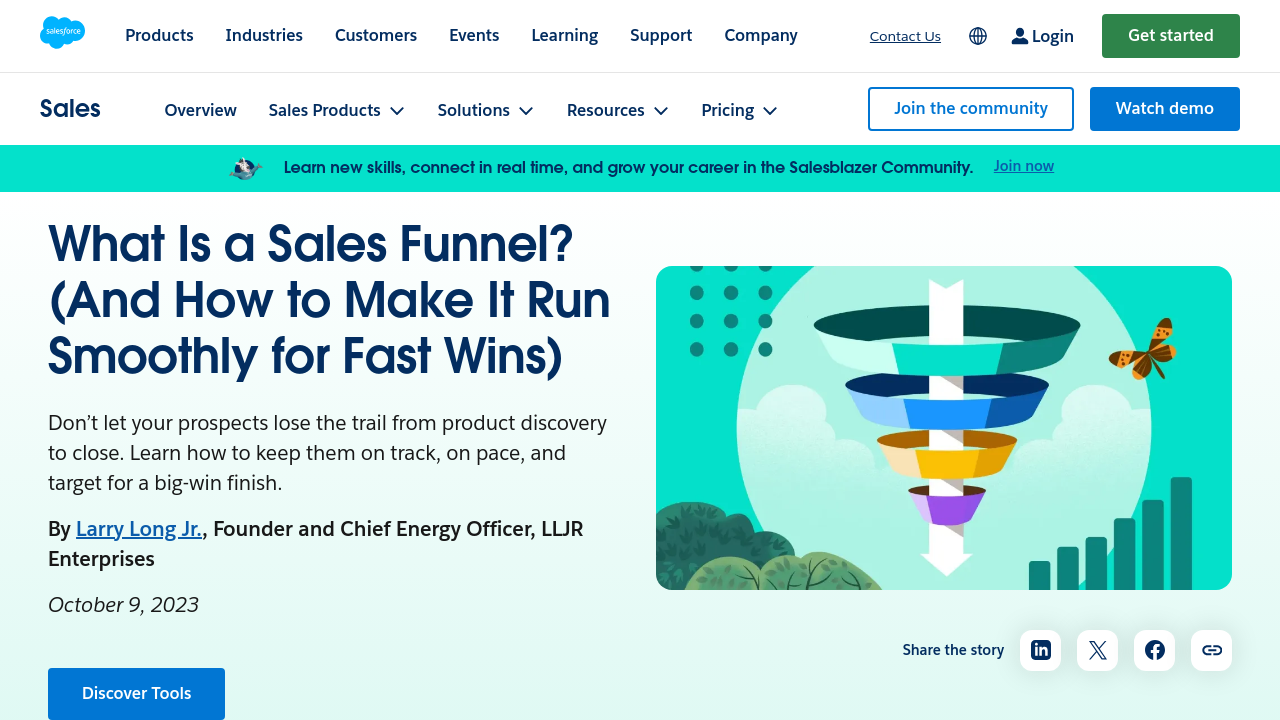
A sales funnel maps the buyer’s journey from “who are these people?” all the way to “take my money.” It’s shaped like a funnel because you always start with more prospects at the top than you finish with at the bottom. Attrition is normal. It’s baked in. According to Salesforce’s guide to sales funnels, a funnel is buyer-centric, while a sales pipeline is rep-centric… same journey, different lens. The old AIDA model (Awareness, Interest, Desire, Action) has quietly grown a fifth stage: retention and loyalty. That shift matters if you care about lifetime value, which any smart affiliate marketer absolutely should.
Why Real Examples Beat Theory
Theory tells you a funnel has stages. Examples tell you where people drop off and what to do about it. That’s the difference between a diagram on a whiteboard and a system that pays your rent. Studying real funnels shows you exactly where urgency offers, live chat, or a well-timed email nudge belong. If you’re just getting started, my beginner-friendly walkthrough on email marketing for affiliates covers the nurture piece in plain English. Takeaway: don’t memorize stages, reverse-engineer funnels you can actually see working.
The Three Universal Funnel Stages and What Happens in Each

Every funnel, no matter how fancy, has three moving parts. Learn these and you can dissect any campaign you see in the wild.
Top of Funnel: Awareness and Lead Capture
TOFU is where strangers meet you. Content, ads, social posts, YouTube videos… all of it exists to get someone to raise their hand. Lead magnets, free tools, and gated content do the actual capture work. If nobody’s giving you their email at this stage, your funnel is a leaky bucket. My guide on how to make your first affiliate commission with email walks through the lead-magnet-to-list mechanics if you’re rebuilding from scratch.
Middle of Funnel: Nurture and Evaluation
MOFU is where trust gets built. Webinars, video demos, comparison guides, case studies… this is the humanization stage. Live chat and marketing automation, per analysis from Close, are the two documented workhorses for real-time engagement here. People compare options at MOFU. If your emails aren’t showing up, someone else’s are. This is where a solid authority-building email sequence earns its keep.
Bottom of Funnel: Decision and Close
BOFU is the money stage. Limited-time offers, free trials, discovery calls, order bumps. The playbook is about reducing friction and creating urgency. Not fake urgency. Real constraints, real deadlines. Attrition still happens here, and that’s fine. Your job isn’t to eliminate drop-off, it’s to improve the conversion rate between each stage. Small lifts compound. Takeaway: if you’re not measuring stage-to-stage conversion, you’re guessing… and guessing is expensive. Peek at my full blog for tactical breakdowns of each stage.
Six Real Sales Funnel Examples and What Makes Them Work
Alright, coffee refill time. Here are six funnel shapes you’ll recognize once you start looking. Steal shamelessly.
SaaS Free Trial Funnel
Companies like Close pull TOFU traffic through SEO and paid ads, hand it a no-credit-card free trial, then use onboarding emails and in-app prompts to convert trial users to paid plans. It works because the risk is zero to try, and the product does the selling. Close.com’s own analysis of sales funnel examples breaks down the mechanics in detail. If you’re modeling a similar path, automating the onboarding sequence is the piece most solo operators skip.
High-Ticket Consultation Funnel
Consultants and coaches replace “Buy Now” with “Book a Call.” The funnel pre-qualifies leads through case studies, testimonials, and application forms before the human ever picks up the phone. It saves time and filters tire-kickers. If your offer is over roughly $1,000, this shape almost always beats a direct-buy page. See how it fits into building recurring revenue online.
E-Commerce Product Funnel
Homepage or paid ad at TOFU. Product detail page at MOFU. Abandoned-cart emails scooping up BOFU drop-off. Brands like Pure Pet Food add a personalized plan quiz that boosts relevance dramatically. The key move: don’t send paid traffic to a homepage full of navigation options. Send it to one page, one offer. Read more tactics in the digital marketing category.
Webinar and Content Funnel
Registration captures the lead. The live event delivers mid-funnel education. The pitch at the end lands with people who’ve already given you 45 minutes of attention. That’s earned trust. Webinars work because attendees self-select. Tie the follow-up to a solid email sequence and the numbers work. My featured posts collection has more on stacking content assets like this.
Landing Page Lead Capture Funnel
One page. One offer. One CTA. Zero navigation. That’s it. Landing pages beat homepages for paid traffic because they eliminate the exits. If you’re running ads to your homepage, you’re leaving money on the table. Start simple. Test one headline change at a time. My get-started guide shows the minimum-viable-funnel setup.
Personalized Quiz or Assessment Funnel
Brands like Hims and Thinx built empires on this. A quiz personalizes the recommendation, which makes the offer feel tailor-made… because it is. Conversion rates on quiz-driven pages routinely outperform generic product pages. The catch: you need enough traffic volume to justify the build. Consider layering workflow automation so the quiz results trigger the right email path automatically. Takeaway: pick the shape that matches your offer, don’t force your offer into the wrong shape.
Common Misconceptions About Sales Funnels
Funnels get mythologized. Let’s kill three myths.
Misconception: Funnels Are Linear / Reality: Buyers Jump Stages
Salesforce explicitly notes that prospects bounce between stages, or leapfrog straight from consideration to purchase. Treating your funnel like a rigid conveyor belt misrepresents how humans actually buy. Design for movement in both directions. See my thoughts on flexible online business models for how this plays out in practice.
Misconception: One Funnel Fits All / Reality: Funnel Shape Depends on Product and Buyer
A B2B enterprise deal with six stakeholders and a nine-month cycle looks nothing like a $29 DTC impulse buy. Different content, different cadence, different close. Trying to reuse one funnel across wildly different offers is a classic beginner mistake. My product reviews section shows how tool choice shifts with funnel type.
Misconception: More Stages Means Better Results / Reality: Simplicity Converts
Crazyegg’s funnel-building guide hammers this: simplicity is a requirement, not a nice-to-have. Every extra stage is another hand-off where leads stall. Agreed-upon definitions across sales and marketing (lead, prospect, MQL, SQL) matter more than stage count. If everyone means something different by “qualified lead,” your funnel is broken before it starts. Takeaway: fewer, clearer stages beat clever, complicated ones. Check the beginner guide tag for more first-principles thinking.
How to Analyze and Optimize Any Sales Funnel
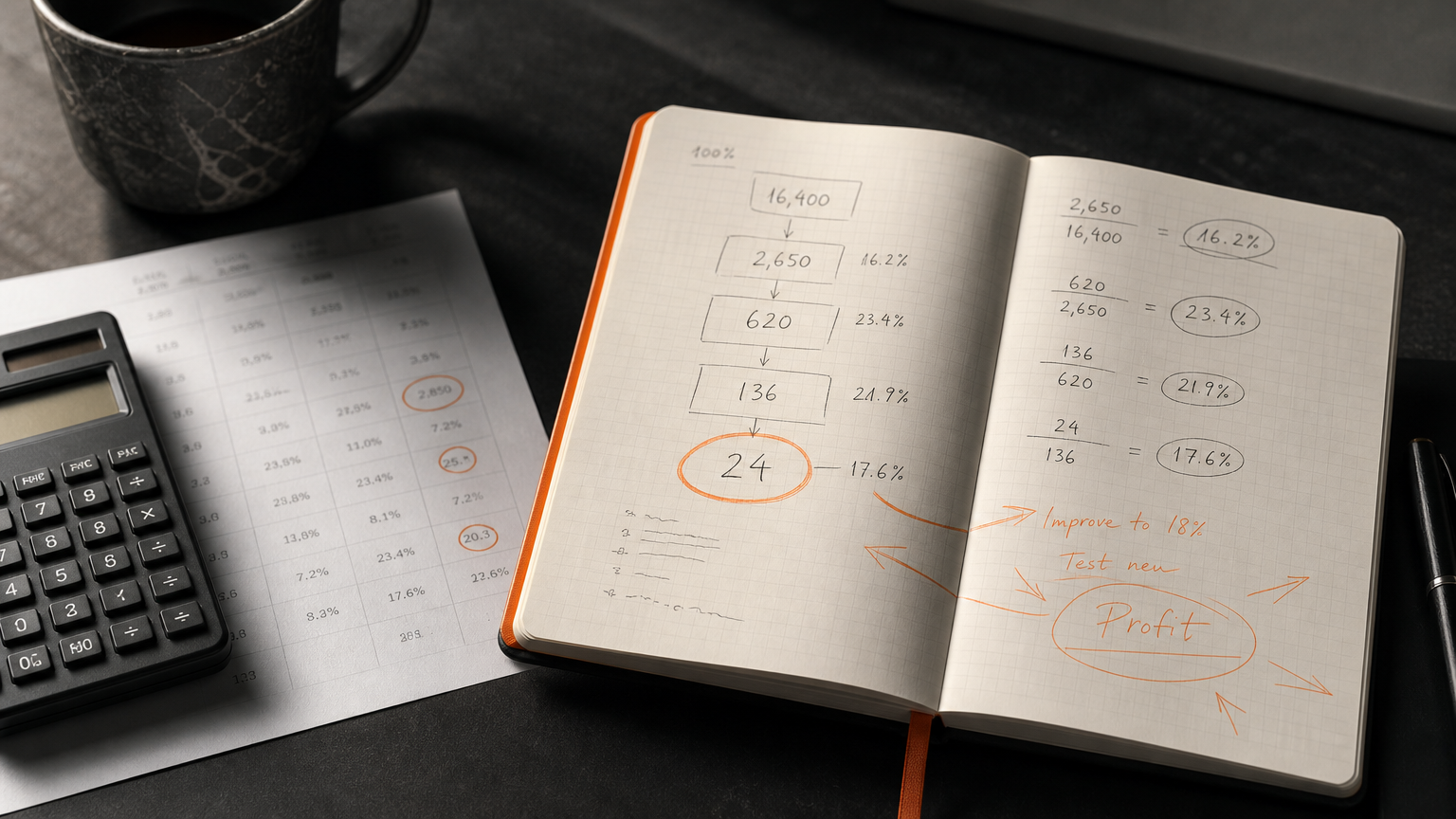
Optimization is boring on purpose. It’s math, not magic.
Identifying Drop-Off Points
Calculate the conversion rate between each stage. Leads to prospects. Prospects to opportunities. Opportunities to closed. The biggest gap is the highest-use fix. That’s it. That’s the whole strategy. Tools like passive income tracking systems can surface these numbers once you’re at scale.
Key Metrics to Track at Each Stage
TOFU: cost per lead, opt-in rate. MOFU: email open rate, engagement time, click-through. BOFU: trial-to-paid, cart abandonment recovery, close rate. Close’s own sales funnel calculator, cited in their guide, is a handy way to model how many leads you need to hit a revenue target. If email is your main lever, the email marketing tag collects the pieces I keep returning to.
Tactics That Consistently Improve Conversion
Personalized landing paths that match the ad someone clicked. Urgency built on real scarcity, not fake countdown timers. A/B testing headlines at the highest-traffic stage, because small lifts there ripple through every downstream stage. And automating the boring parts so you can focus on the offer, not the plumbing. Takeaway: fix the biggest leak first, then the next one, then the next one.
How to Choose the Right Funnel Model for Your Business
Which funnel is your funnel? Two variables decide.
Matching Funnel Type to Product Price and Complexity
Low price, low complexity: short direct funnel. Minimal nurture. Straight to buy. High price, high complexity: long mid-funnel education, plus a human touchpoint before close. Aaron Ross’s “Predictable Revenue” assembly-line model still holds for scaling B2B, separating lead generation from closing so each rep does one job well. Service businesses lean toward the discovery-call shape, using content and social proof to attract self-qualifying traffic. My author page collects the pieces where I dig into this more.
Building Your First Funnel: What You Need Before You Start
Crazyegg’s checklist is refreshingly short: (1) know your target market, (2) have actual leads, (3) pick a tracking system (CRM, spreadsheet, whatever), (4) agree on stage definitions across your team. That’s the prerequisite list. Not fancy software. Not a designer. Just clarity. Reviewing competitor ad-to-landing-page paths tells you what’s already converting in your niche. If you want the shortest path from zero to first funnel, my homepage resources point you at the tools I actually use. Takeaway: pick the shape, gather the four prerequisites, ship a rough version this week.
Frequently Asked Questions
What are the main stages of a sales funnel?
Most funnels have three universal stages: top (awareness and lead capture), middle (nurture and evaluation), and bottom (decision and close). Modern models add a fifth retention stage to capture repeat purchases and referrals from existing customers.
What is an example of a simple sales funnel?
A landing page with a lead magnet, a five-email welcome sequence, and a single offer at the end. That’s it. It’s the minimum viable funnel and works for affiliates, coaches, and course creators just fine.
How is a sales funnel different from a sales pipeline?
A sales funnel tracks the buyer’s journey from the prospect’s point of view. A sales pipeline tracks the rep’s activities from the seller’s point of view. Same deal, two lenses, different metrics for each.
What makes a sales funnel convert well?
Message consistency from ad to landing page, a lead magnet worth trading an email for, timely email nurture that answers real objections, genuine urgency at the close, and one clear call to action per page. Simple beats clever.
How do I know if my sales funnel is working?
Track conversion rates between each stage. If leads flow in but nobody books a call or buys, you have a mid-funnel trust gap. If clicks don’t become leads, your TOFU offer or landing page needs work. Numbers tell the story.
What tools do I need to build a sales funnel?
At minimum: a landing page builder, an email service provider, and a way to track conversions. A CRM helps once you scale. Fancy funnel software is optional, and often skipped by profitable solo operators.
Can a sales funnel work for a service business?
Absolutely. Service funnels usually anchor around a free discovery call or audit offer, with case studies and testimonials doing the pre-qualification work. The goal is filtering out tire-kickers before anyone gets on the phone.
How long does it take to see results from a sales funnel?
Expect 30 to 90 days for a new funnel to produce reliable data. Paid traffic gets you signals faster; organic traffic takes longer. Optimization is ongoing, so treat the launch as a starting point, not a finish line.
Wrapping Up
Funnels aren’t magic. They’re just patterns, and once you can spot them, you can build them. Pick the shape that fits your offer, nail the four prerequisites (audience, leads, tracking, shared definitions), and ship a rough version. Then measure, patch the biggest leak, repeat. If you want the tools, templates, and email sequences I actually use, poke around jeffaman.com and grab whatever helps. Now go build the thing.