If you’ve been hunting for a simpler way to sell digital products online, you’ve probably bumped into SamCart. At Jeff Aman, we dig into tools like this so you know exactly what you’re getting before you hand over your credit card. SamCart is a checkout-first ecommerce platform built for creators, coaches, and digital sellers who want high-converting product pages without wrestling with a full storefront setup.
Definition: What Exactly Is SamCart?
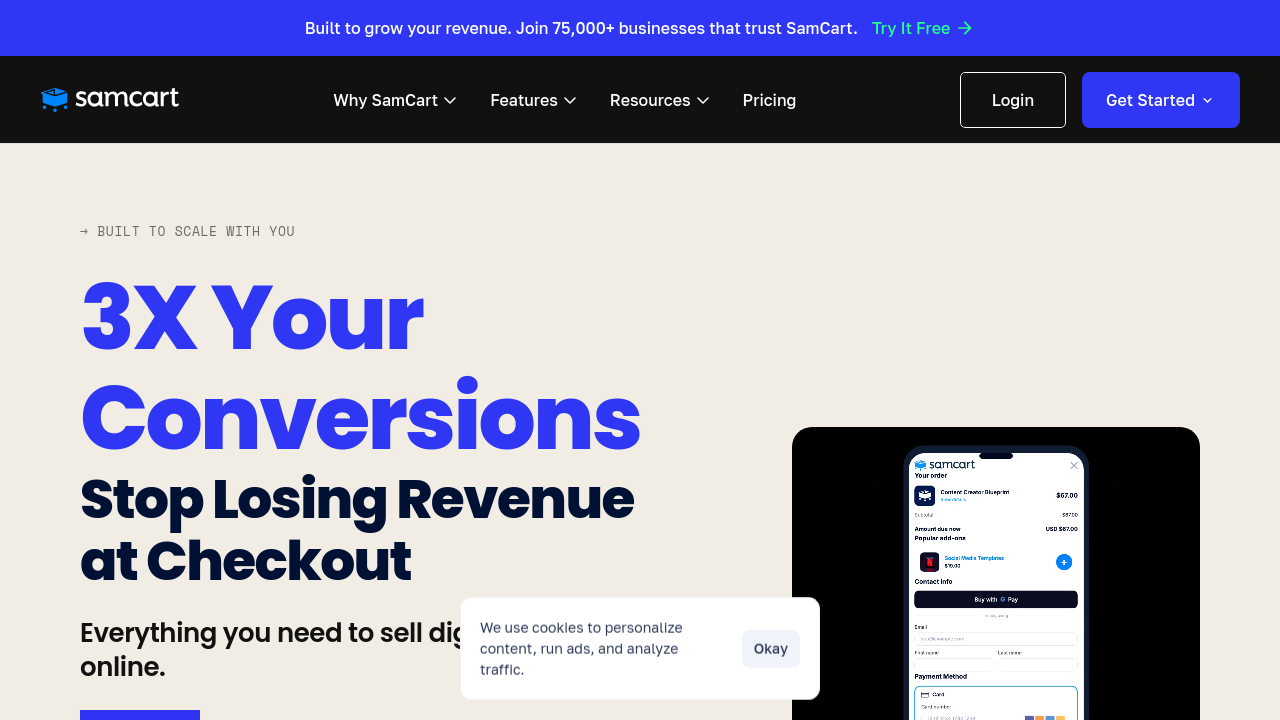
SamCart is a web-based checkout platform, not a full store builder. It focuses on product-level checkout pages that turn visitors into buyers, then squeezes more value from each order with bumps, upsells, and recovery flows. Think of it as the cash register plus the sales page, not the whole website. If your goal is to sell one clear offer well, that narrower focus is a feature, not a bug, and it pairs nicely with a broader plan for how to automate your online business end to end.
The Core Idea in Plain English
Most tools help you make the sale. SamCart is designed to make every sale worth more. That mission shows up in the product: single-step checkout pages, order bumps at the cart, one-click upsells right after purchase, and automated recovery on failed subscription payments. It’s a lean way to test digital offers without building a whole storefront, which is why it shows up so often on lists of beginner-friendly income tools.
Who Built It and When
SamCart was founded in 2014 and is headquartered in Austin, Texas, according to the company’s LinkedIn profile. Over 75,000 businesses have used it, and SamCart says its platform has processed more than $8 billion in real transactions. That data now trains an in-house AI assistant, “Sam,” which helps write sales copy, suggest upsells, and generate pages. SamCart charges a monthly subscription with no per-transaction fees, which is a different economic model than the payment-processor route most beginners take when they first think about starting an online income stream.
Takeaway: SamCart is a focused checkout tool with a long track record and a subscription pricing model, not a cut of every sale.
How SamCart Works: The Core Features
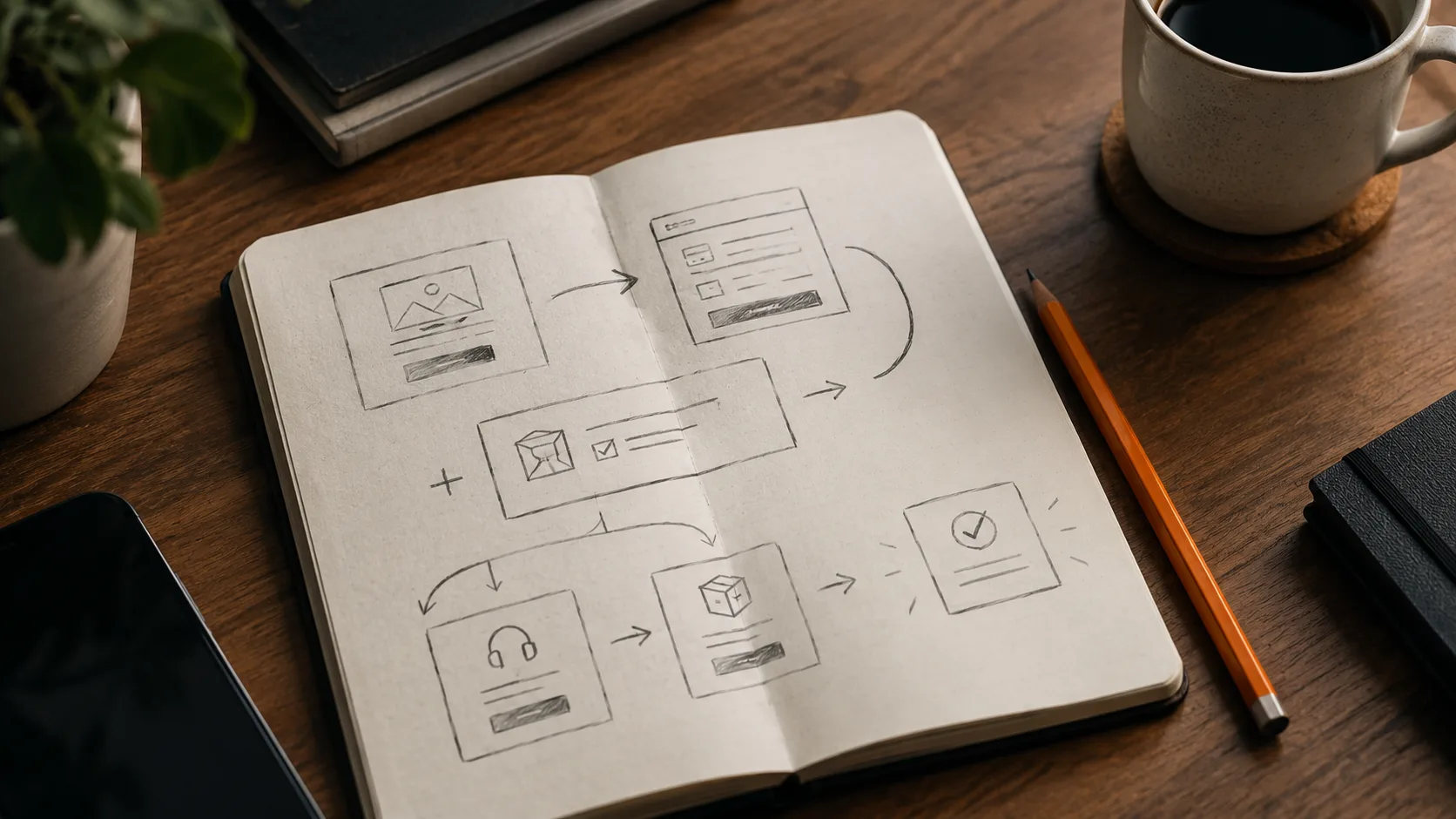
Under the hood, SamCart is built around a small set of levers that each nudge revenue up per customer. You do not need all of them on day one, but knowing they exist helps you plan an online offer that actually earns more than it costs to run.
Checkout Pages and Payment Options
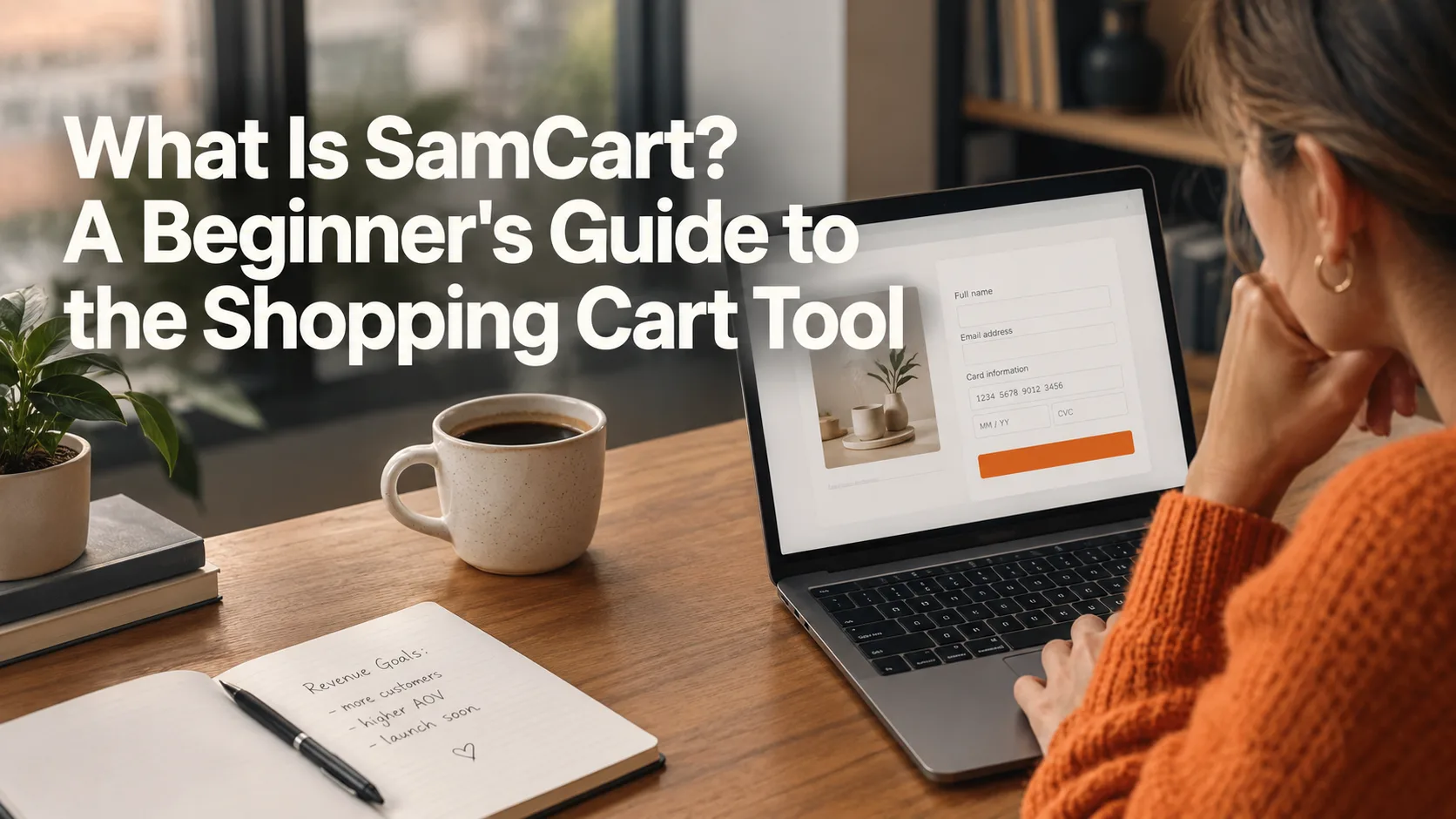
SamCart uses single-step checkout pages with drag-and-drop customization and mobile-responsive templates. Payments flow through Stripe or PayPal, so you keep your existing processor relationship. The templates are functional out of the box; swap fonts, colors, and blocks to match your brand, and you have a live page in an afternoon, which is one reason it keeps popping up in affiliate marketing training round-ups.
Order Bumps and One-Click Upsells
Order bumps let a buyer tick a checkbox to add a complementary product right at checkout. SamCart reports a 31% average revenue lift from order bumps. One-click upsells fire immediately after purchase, when buyer intent is at its peak, with no card re-entry. SamCart cites a 68% higher average order value with upsells in place. Those are vendor numbers, but the pattern lines up with what most funnel operators see when they map out a proper sales funnel.
Subscription Recovery and Cart Abandonment
If you sell memberships or recurring products, Subscription Saver quietly retries failed payments and handles dunning behind the scenes. SamCart says it recovers 18–23% of recurring revenue that would otherwise slip away. Cart abandonment emails go out to shoppers who drop off mid-checkout, and SamCart reports recovering roughly 15% of abandoned carts. That kind of quiet, automated revenue is exactly the sort of thing you want running while you focus on passive income creation from scratch.
Takeaway: The features stack on each other. Even a basic Launch plan setup with one bump and one upsell can meaningfully raise average order value.
Who Is SamCart Actually For?

SamCart is opinionated software. It’s great for a specific type of seller and awkward for others, so let’s be honest about both sides.
Ideal Users
SamCart is built for course creators, coaches, consultants, and digital product sellers who want to go from idea to live checkout page in a single sitting. It plays well with ConvertKit, Kajabi, and ActiveCampaign, so if your email marketing stack is already in place, SamCart slots in cleanly. If you’re still figuring out where your audience will come from, spend a weekend on email list building fundamentals before you optimize a checkout page.
Where SamCart Falls Short
SamCart is not built for full-scale ecommerce. Large catalogs, physical inventory, and shipping logistics are outside its lane. There’s no built-in blog or SEO content tools either, so if organic traffic is your growth plan you’ll need a separate site alongside it. Pricing runs from $79 to $319 per month with only a 7-day free trial, which stings for brand-new sellers, and it’s worth being honest that affiliate marketing is not effortless for beginners either, so a $79/month tool is a real commitment.
Takeaway: Pick SamCart if you sell one to a handful of digital offers and already have (or are building) traffic. Skip it if you need a catalog store or a content site.
SamCart Pricing: What Does It Cost?

Pricing is where most beginners pump the brakes, so let’s lay it out clean.
Plan Tiers and What You Get
| Plan | Monthly | Best For | Notable Features |
|---|---|---|---|
| Launch | ~$79 | Solo sellers, first product | Checkout pages, order bumps, Stripe/PayPal |
| Grow | ~$159 | Growing creators | Upsells, subscription tools, custom domains |
| Scale | ~$319 | Serious operators | A/B testing, affiliate center, advanced subscription |
Annual billing knocks the sticker price down, and there are no transaction fees on any plan. That flat subscription model is friendlier to sellers with volume, but it can feel heavy before your first few sales roll in, especially if you’re still working through how to get to your first affiliate commission.
Is SamCart Worth the Price?
Compared to entry-level tools like Podia or Payhip, SamCart is more expensive. The math flips once your bump and upsell revenue starts to pay for the subscription itself. The Ecomm.design SamCart review frames it well: it’s a strong pick for creators selling single offers, courses, and high-ticket products where a small conversion lift is worth real money. If you’re chasing pure passive setups, look at more general passive income tool paths first.
Takeaway: SamCart pays back on volume and average order value, not on cheapness. Do the arithmetic before you commit.
Common Misconceptions About SamCart
A lot of new sellers assume the wrong things about what SamCart is. Three keep coming up.
Misconception: SamCart Replaces Your Whole Website
Reality: SamCart is a checkout and sales page tool, not a CMS. Most users pair it with a separate site or blog to handle content, SEO, and audience-building. That split is not a weakness once you understand it; it just means you plan your stack around long-term online business automation, not a one-tool solution.
Misconception: It Is Only for Big Sellers
Reality: enterprise operators love the Scale plan, but plenty of beginners run a single digital product on Launch and grow from there. If you have one clear offer and an email list starting to warm up, you can absolutely justify the tool, especially if you’re following a proven beginner passive income playbook.
Misconception: SamCart Is Just a Payment Processor
Reality: Stripe and PayPal are the processors. SamCart is the storefront layer on top of them: checkout page design, upsells, order bumps, analytics, and recovery flows. It also doesn’t host courses at the depth of Kajabi or Teachable; it handles the transaction layer, not the classroom. The AI features are there to speed up page creation, not to run a business for you while you sleep, which is a common expectation gap around modern affiliate tooling.
Takeaway: SamCart is a specialized layer in your stack, not a whole business in a box.
How to Get Started with SamCart
If SamCart still looks like a fit, here’s the shortest path to a live page.
Your First Steps as a Beginner
- Start the 7-day free trial and create an account.
- Connect Stripe or PayPal in Settings.
- Pick a pre-built checkout template and drop in your product details, price, and image.
- Add at least one order bump on day one.
- Publish the page and share the link.
That’s genuinely it for a v1 launch. If you’re missing the traffic piece, spend a session on building an audience through email marketing before you obsess over checkout design.
Tips to Get More from the Platform Early
Turn on the affiliate center (available on higher plans) and recruit a handful of partners on commission; it’s an old-school but reliable traffic play. Connect SamCart to your email tool via native integration or Zapier so every buyer flows into your follow-up sequence automatically. Then check the funnel analytics dashboard weekly to spot where buyers drop off, and iterate on your copy and pricing. Small tweaks compound, especially when paired with smart niche selection that actually matches buyer intent.
Takeaway: Ship a rough v1, add one bump, wire up email, then read the analytics. That loop beats endless template tweaking.
Frequently Asked Questions
What does SamCart do exactly?
SamCart provides product-level checkout pages, order bumps, one-click upsells, subscription recovery, and cart abandonment emails. It sits on top of Stripe or PayPal, giving digital sellers a conversion-focused storefront layer without needing a full ecommerce site.
How much does SamCart cost per month?
SamCart plans run from about $79 per month on Launch to $319 per month on Scale, billed monthly. Annual billing lowers the price. There are no per-transaction fees, so the subscription is the total platform cost.
Does SamCart have a free plan?
No permanent free plan exists. SamCart offers a 7-day free trial on all plans, letting you build pages, connect a processor, and test a live checkout before paying. After the trial, a paid subscription is required to continue selling.
Is SamCart good for beginners?
Yes, if you have one clear digital offer and some way to send traffic. Beginners can launch a checkout page in an afternoon on the Launch plan, though newer sellers should budget carefully since the platform is not free.
What is the difference between SamCart and Shopify?
Shopify is a full store builder for catalogs, inventory, and shipping. SamCart is a checkout tool for one or a few digital products, focused on maximizing revenue per sale through bumps and upsells. Different jobs, different tools.
Does SamCart take a percentage of sales?
No, SamCart charges a flat monthly subscription and takes no percentage of your sales. Your payment processor (Stripe or PayPal) still charges its standard transaction fees, but SamCart itself does not skim a cut of each order.
Can I sell courses on SamCart?
You can sell access to a course through SamCart’s checkout, but SamCart does not host course content the way Kajabi or Teachable does. Most sellers pair SamCart’s checkout with a dedicated course host and connect the two.
What payment methods does SamCart accept?
SamCart processes payments through Stripe and PayPal, which together cover major credit cards, debit cards, Apple Pay, Google Pay, and PayPal balances. Availability of specific methods depends on your processor account and the country you’re selling into.
Final Word
SamCart is not the cheapest tool on the block, and it’s not trying to be. It’s a focused checkout layer for creators who want to squeeze more revenue out of every visitor without building a Shopify-scale store. If that matches where you are, start with the free trial, ship one product page, add an order bump, and read your numbers. For more plain-English breakdowns of the tools and tactics behind digital income, keep an eye on the Jeff Aman blog as you build.