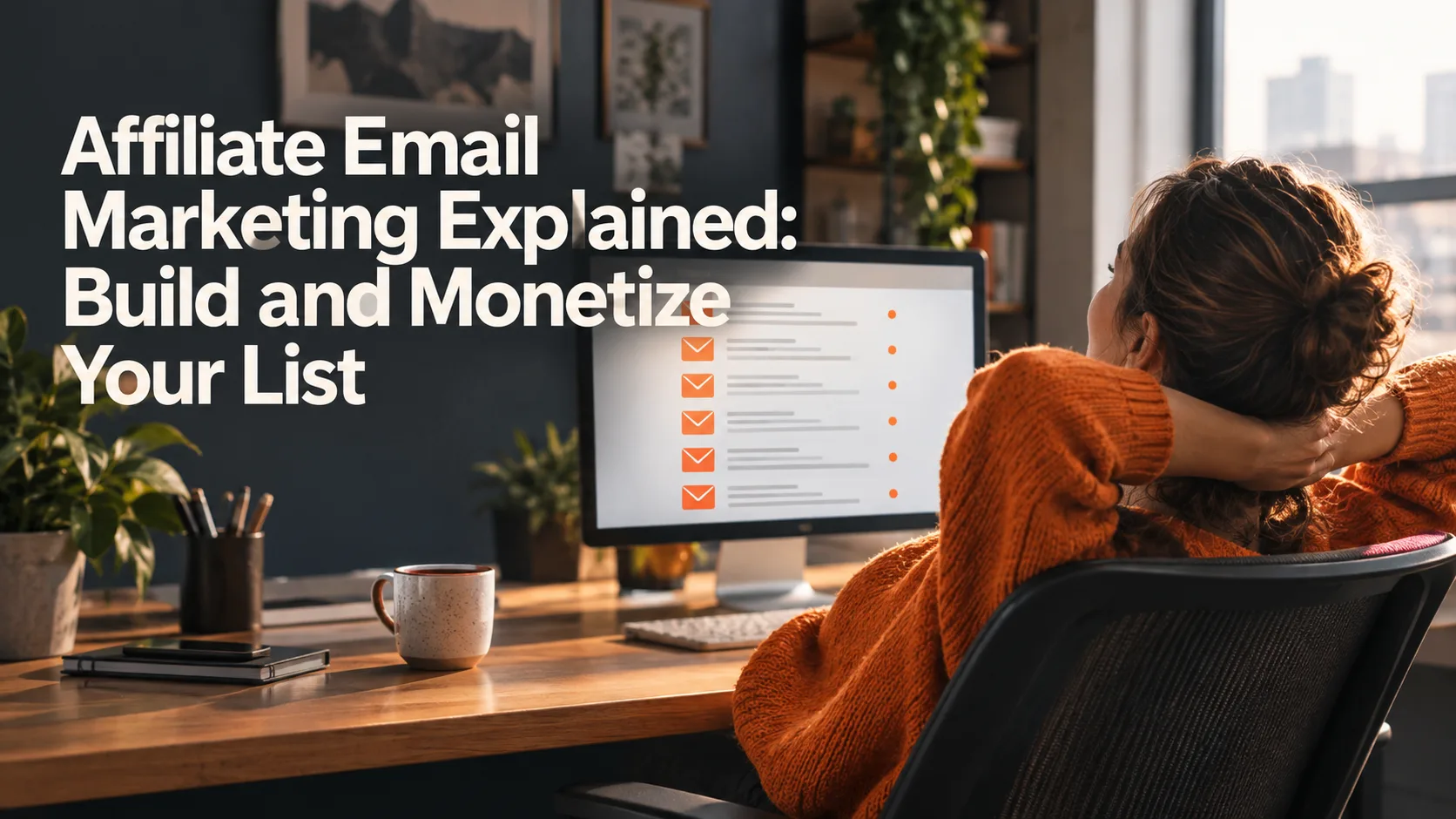
Affiliate email marketing is one of the most reliable ways to turn a subscriber list into consistent commission income. Unlike social media or paid ads, your email list is an asset you own outright. At Jeff Aman, the focus is on helping everyday people build that asset from scratch, nurture it properly, and promote affiliate offers in a way that actually converts… without burning out the audience you worked so hard to earn.
What Is Affiliate Email Marketing

Short version: you send emails to a list you built, those emails include tracking links to other people’s products, and when a subscriber buys, you get paid a commission. That’s it. No warehouse, no customer service, no product roadmap. Just you, your list, and offers that fit.
The Core Definition
Affiliate email marketing means promoting third-party products or services to your own email subscribers using unique tracking links, then earning a cut on the resulting sales or sign-ups. According to Twilio’s guide on affiliate email programs, affiliates use those unique links so the parent company can attribute each conversion correctly and pay out reliably. It’s performance-based; no click, no clunky invoice. If you’re new to the model itself, the walkthrough at is affiliate marketing hard for beginners lays out the learning curve honestly.
How It Differs From Other Affiliate Channels
Social platforms can wipe your reach overnight with an algorithm tweak. A paid ad account can get flagged and shut down before lunch. An email list? Yours. You export the CSV, you move it, nobody can take it. That ownership is why email tends to out-convert social and paid on the same offer… subscribers already opted in and already trust the sender. Affiliate marketing overall drives more than 15% of digital media revenue, according to EmailVendorSelection, and email is one of the most efficient slices of that pie. The bigger picture case for building an owned audience is spelled out in this passive income online guide.
Takeaway: you’re renting attention on social. You’re building equity with email.
How to Build an Email List for Affiliate Marketing

You can’t monetize a list you don’t have. Step one is getting real subscribers on real infrastructure. Nothing fancy.
Choosing a Lead Magnet That Attracts the Right Subscribers
A targeted lead magnet, a free guide, checklist, swipe file, or short mini-course, is the fastest way to attract subscribers who actually care about the niche you’ll be promoting into. Broad “sign up for my newsletter” boxes get crickets. A specific promise like “the 7-email swipe file I use to promote software offers” pulls the right people. The step-by-step at how to start email list building as a beginner covers the mechanics.
Picking an Affiliate-Friendly Email Service Provider
Here’s the trap almost every beginner walks into: they pick a “popular” ESP, upload their list, start sending affiliate promos, and get banned. According to research from EmailToolTester, Mailchimp, MailerLite, Kit, HubSpot, and Constant Contact all restrict or outright prohibit affiliate marketing. Affiliate-friendly options they name include GetResponse, Moosend, SendX, EmailOctopus, Brevo, AWeber, and Sendlane. Pick from that shortlist and you skip a lot of pain. There’s more on the tooling question in best affiliate marketing training programs for beginners.
Setting Up Opt-In Forms and Landing Pages
Most affiliate-friendly ESPs bundle landing pages and opt-in forms right into the dashboard, which keeps your tech stack lean when you’re starting from zero. Add tags at the point of opt-in (source, interest, lead magnet) so future segmentation is basically free. For a wider look at niche fit before you build the form, see niche examples for affiliate marketing.
Takeaway: targeted lead magnet, affiliate-friendly ESP, tag from day one. Skip any of those and you’re rebuilding later.
How Affiliate Email Marketing Actually Works

Once someone opts in, the machine takes over. The best affiliate email marketers barely touch their inbox… because the sequence does the selling.
The Welcome Sequence
A welcome sequence is 3 to 7 emails that fire automatically after opt-in. It delivers the lead magnet, sets expectations (“expect 2 emails a week from me”), tells your quick origin story, and softly introduces the kinds of products you’ll recommend later. No hard pitch yet. If you want a tactical breakdown, how to make your first affiliate commission with email marketing walks through what to say in each slot.
Nurture Emails and Trust Building
Between promotions, you send nurture emails that teach, entertain, or solve a small problem. This is the trust bank. Every helpful email is a deposit; every promo is a small withdrawal. Marketers who only pitch go broke on trust… fast. The authority-building angle is covered in more depth in how to use email marketing to build authority in affiliate marketing.
Promotional Emails That Convert
A promotional email should do three things: open with a clear problem or benefit, tell a short story or give a concrete reason to care, and end with one call to action and one affiliate link. Not three products. Not “here’s five bonuses.” One offer, one link, one decision. Automation platforms let this run on autopilot; a subscriber can move from opt-in to purchase recommendation without you lifting a finger after setup. The automate your online business guide covers the wiring in more depth. According to Emercury, five sequence types drive most affiliate results: welcome, nurture, promotional, re-engagement, and post-purchase follow-up.
Takeaway: welcome, nurture, promote. Rinse. Automate. Repeat.
Choosing the Right Niche and Affiliate Offers

Not all commissions are created equal. Match the offer to the audience or the whole funnel leaks.
Matching Offers to Your Audience
The most profitable affiliate email marketers stay in a single niche so every email feels relevant. A general “make money online” list will out-earn nothing, because nothing lands with everyone. Promote products you can speak to credibly, through research, community, or genuine use, and your click-through rates will climb on their own. The B2B sales funnel breakdown is useful if you’re serving business buyers rather than consumers.
Evaluating Commission Structures
Commission structures vary widely. Some programs pay a flat fee per conversion; others give you a percentage of the sale. Twilio notes both models reward consistent performance, and the right choice depends on price point and volume. Then there’s the quiet winner: recurring commissions. Software subscriptions and membership sites pay you month after month for a single referral, which is how affiliate income compounds instead of resetting every 30 days. For the long-term income angle, see how to create a passive income online from scratch.
Takeaway: one niche, offers you’d actually recommend, and lean into recurring commissions when you can.
Email Deliverability and Staying Out of the Spam Folder
You can write the best promo in the world. If it lands in Promotions or Spam, nobody sees it.
Why Deliverability Matters More for Affiliates
Many ESPs restrict affiliate marketing precisely because affiliate emails get flagged as spam more often, and every complaint dings the provider’s sender reputation. That’s why using an affiliate-friendly platform matters, and why treating deliverability as a first-class concern isn’t optional. The digital marketing category has more on inbox strategy if you want to go deeper.
Best Practices to Protect Your Sender Reputation
A few habits keep you in the inbox:
- Clean your list regularly. Remove subscribers who haven’t opened in 60 to 90 days.
- Skip sketchy link cloakers. Long redirect chains trip spam filters.
- Authenticate your domain. SPF, DKIM, and DMARC records are baseline; most ESPs walk you through it.
- Stay consistent. Same from-name, same from-address, same rough cadence.
- Balance your ratio. More value emails than pitches keeps complaints low.
The bigger point: deliverability is a downstream effect of respecting your list. More on that mindset in how to get passive income online starting from zero.
Takeaway: clean list + authenticated domain + more value than pitches = inbox, not spam.
Scaling Your Affiliate Email Income
Once a sequence is converting, scaling is a math problem: put more of the right people into the top, optimize what’s already working, and stop guessing.
Growing Your List With Paid and Organic Traffic
With a converting funnel in place, paid traffic (solo ads, Meta lead ads, YouTube pre-rolls) can accelerate list growth without rebuilding anything. Organic traffic from SEO articles, YouTube videos, or social posts feeds the list for free over time and usually produces higher-quality subscribers than cold paid clicks. Mix both. A steady list of traffic source ideas is worth bookmarking.
Tracking Performance and Optimizing Campaigns
Watch four numbers: open rate, click-through rate, conversion rate, and earnings per subscriber (EPS). EPS is the honest one, it tells you what a subscriber is actually worth. A/B test subject lines relentlessly because open rate is the first gate every email must pass. Then segment buyers away from non-buyers and send them different follow-ups; buyer sequences almost always earn more per send. The make a passive income online guide frames how those small optimizations stack over a full year.
Takeaway: feed the top with paid + organic, measure EPS, test subject lines, treat buyers like buyers.
Frequently Asked Questions
What is affiliate email marketing and how does it work?
Affiliate email marketing is the practice of promoting other companies’ products to your email subscribers using unique tracking links. When a subscriber clicks and buys, you earn a commission. The list, the sequence, and the offer do the work.
Can you do affiliate marketing with email lists?
Yes, and it’s one of the highest-converting affiliate channels available because subscribers already trust the sender. The catch is you must use an email service provider that explicitly allows affiliate promotions in its terms.
Which email marketing platforms allow affiliate links?
Affiliate-friendly platforms named by EmailToolTester’s research include GetResponse, Moosend, SendX, EmailOctopus, Brevo, AWeber, and Sendlane. Mailchimp, MailerLite, Kit, HubSpot, and Constant Contact restrict or prohibit affiliate marketing.
How do I build an email list for affiliate marketing from scratch?
Pick one niche, create a targeted lead magnet, put it behind an opt-in form on a simple landing page, and drive traffic from SEO, YouTube, social, or paid ads. Tag subscribers by source and interest from day one.
How much money can you make with affiliate email marketing?
Income ranges from a few dollars a month to full-time livings and beyond. It depends on list size, niche, offer commission rates, and sequence quality. Recurring-commission products can produce compounding monthly income from past referrals.
What should I put in my affiliate marketing emails?
Send a mix: welcome emails, nurture emails that teach or solve small problems, and promotional emails with a single clear call to action and one affiliate link. Keep the ratio value-heavy so subscribers stay engaged.
How do I avoid getting my affiliate emails marked as spam?
Use an affiliate-friendly ESP, authenticate your sending domain with SPF, DKIM, and DMARC, prune unengaged subscribers regularly, avoid link cloakers, and keep your value-to-promo ratio balanced. Consistency in sender name and cadence matters too.
Do I need a website to start affiliate email marketing?
Not strictly. Most affiliate-friendly ESPs include landing pages and opt-in forms, so you can capture subscribers without a full site. That said, a simple blog or content hub gives you organic traffic and long-term credibility.
Wrapping Up
Affiliate email marketing rewards patience, a real niche, and boring consistency. Pick an affiliate-friendly ESP, build a targeted list with a lead magnet worth downloading, run a welcome sequence that earns trust before it pitches, and promote offers you’d actually recommend. Track EPS, protect your deliverability, and let automation do the repetitive work. For more plainspoken affiliate playbooks in the same voice, the archive at jeffaman.com is a good next stop… start there and pick the article that matches whichever piece of your funnel is weakest right now.