Learning affiliate marketing can cost nothing at all, since most programs are free to join and the Easy Commission Funnel is free to register. Add hosting and a paid course, though, and you’re looking at a few hundred dollars, or around a thousand for the pricier programs. The gap comes down to one thing… how much structure you want.
The Short Answer: What Learning Affiliate Marketing Costs
Here’s the range in one line: free, to a few hundred dollars, to roughly $1,000 for a big-name course.
According to Shopify’s beginner guide, most affiliate programs are free to join. So the joining part isn’t where the money goes.
The money goes into learning and tools. According to a member of a Facebook affiliate marketing group, starting doesn’t cost a lot: at most a few hundred bucks, and that covers hosting plus a decent course.
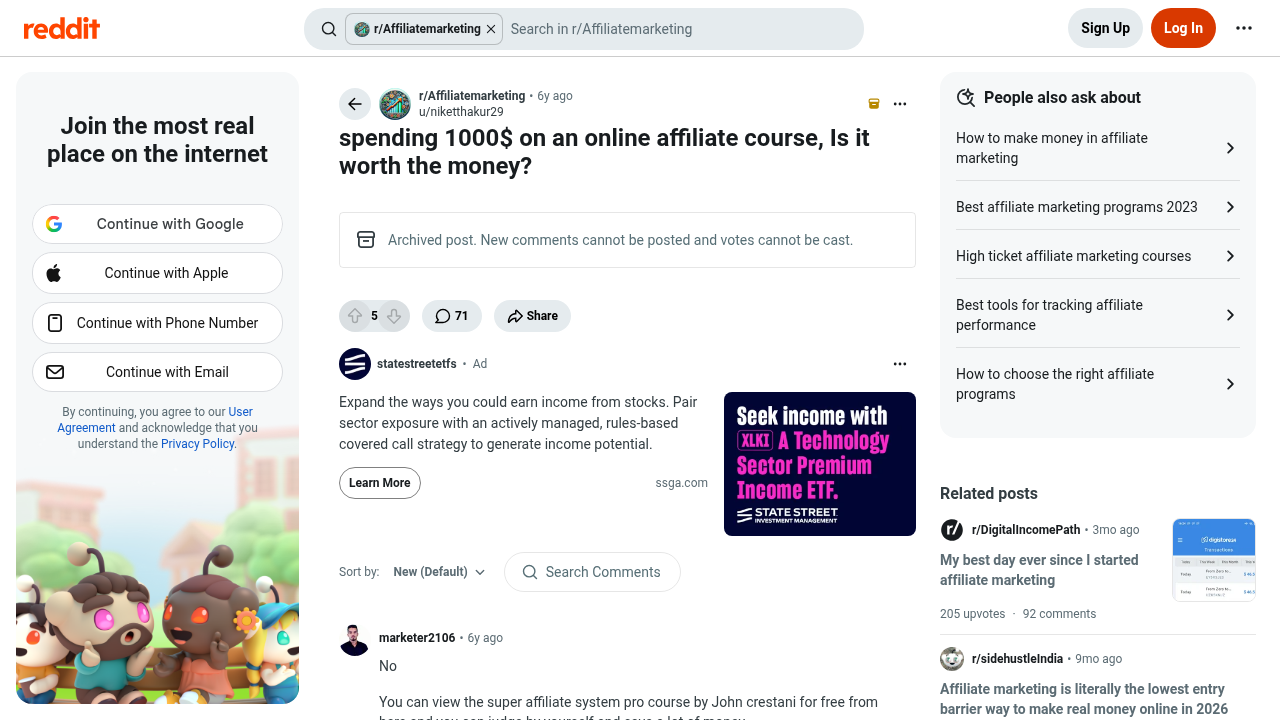
On the other end, a Reddit thread on r/Affiliatemarketing asks whether a $1,000 course is worth it. Some replies push back, saying the material is free on YouTube from legit affiliate marketers, and one suggests buying 50 books instead.
Anything you spend beyond that should buy you speed or structure, not a promise.
Cost Breakdown by Learning Path

Four paths. Four very different price tags. Here’s how they stack up.
| Tier | What you get | Typical range |
|---|---|---|
| Free self-study | YouTube, blogs, free-to-join programs | – |
| Free done-for-you system (ECF) | Prebuilt page, expert videos, automated follow-ups, traffic bonus | – |
| Low cost | Hosting, domain, email tool | Part of the few hundred dollars cited in a Facebook group |
| Paid courses | Structured training, community | – |
Free: YouTube, blogs and free-to-join programs
This is where most people start… and where a lot of people get stuck. The info is out there. It’s just scattered. You’ll watch a video on niches, then one on traffic, then one on funnels, and none of them connect.
Still, it works if you’re disciplined. Pick a niche (our guide on what a niche in affiliate marketing is helps), join a free program, and learn by doing.
Takeaway: Free content costs you time, not money. Set a learning plan so the time isn’t wasted.
Free done-for-you system: Easy Commission Funnel
Here’s the zero-cost path most “cost” articles skip.
The Easy Commission Funnel (ECF) is a free, prebuilt affiliate marketing system. You register, get a unique link, and send people to it. Registration is free.
What you get from day one:
- A prebuilt page, so you don’t have to build one yourself to start
- Expert video content included from day one
- Automated follow-ups that keep working after someone opts in
- A free paid-traffic bonus at sign-up
- LeadsLeap integration for lead management and SendShark for broadcast emails
And the part that matters long term: new leads are routed into your own autoresponder. So you’re building an independent list, not renting someone else’s. Think of it like getting a fishing boat with the nets already tied.
If you’re cash-strapped, pair this with our guide on how to start affiliate marketing with no money.
Takeaway: If budget is your blocker, a free prebuilt system removes it. Register and start sending traffic.
Low cost: hosting, domain and email tools
Once you want your own site, costs show up: a domain, hosting, and an email marketing tool. Prices vary by provider and plan, so check current pricing before you commit.
The email tool is the one worth paying for first. Your list is the asset. Our breakdown of affiliate email marketing basics explains why.
Takeaway: If you only pay for one tool, make it the autoresponder.
Paid courses
Courses range widely. A roundup on The Doublethink names options like The Authority Site System, Affiliate Lab, Project 24, Launch Your Blog Biz and Blog Growth Engine, and argues you don’t have to spend thousands to get good training.
Takeaway: Buy a course for structure and accountability. Don’t buy it for a shortcut.
A Sample First-Year Budget

Numbers help. So here’s a simple worked example.
For example, say a beginner plans this first year:
- A domain and basic hosting for a small blog
- A Mailchimp-style autoresponder to collect leads
- One mid-priced course
Using the Facebook group estimate, hosting plus a decent course lands at a few hundred dollars.
Now compare the free route:
| Item | Paid route | Free route |
|---|---|---|
| Landing page | Your own hosting and domain | ECF prebuilt page |
| Training | Paid course | Free blogs, YouTube, ECF videos |
| Follow-up emails | Write your own | ECF automated follow-ups |
| Your list | Your autoresponder | Your autoresponder |
Notice the last row. Either way, you own the list. If you’re going the free route, plan to add your own autoresponder once leads start flowing. Our guide on building an email list for affiliate marketing covers the setup.
Takeaway: Write down your yearly budget before buying anything. Then spend only on the gap the free route leaves.
Do-It-Yourself vs Paying for Training

Here’s the truth nobody puts in the sales page… the real cost isn’t dollars. It’s time and mistakes.
Self-teaching is free but slow. You’ll piece things together, and you might spend months on a strategy that doesn’t fit you.
Paid courses give you a path. But a course you don’t finish is the most expensive option on this list. The Doublethink roundup’s author even describes picking poor courses early on and losing months.
Prebuilt systems like ECF skip the building stage. You focus on traffic and list building while the funnel does the heavy lifting.
| Path | Money | Time | Risk of mistakes |
|---|---|---|---|
| DIY | Low | High | High |
| Paid course | Medium to high | Medium | Medium |
| Prebuilt system | Free to register | Low setup | Lower on the build side |
We also create affiliate marketing courses, and the blog publishes beginner guides on affiliate marketing, email marketing, sales funnels and passive income. If you’re weighing options, compare training programs for beginners side by side. And if you’d rather build things yourself, start with how to create a sales funnel for affiliate marketing.
Takeaway: Pick the path that matches how much time you have, not just how much money.
Red Flags: When a Price Is Too Good (or Too High) to Be True
Remember: most affiliate programs are free to join. If someone charges you just to become an affiliate, ask questions.
Watch for these:
- Income promises. Any course guaranteeing a specific monthly figure is selling a dream.
- Upsell chains. A cheap front-end offer that leads to tier after tier of “advanced” add-ons.
- Hidden fees. Required tools or memberships that only appear after you pay.
- No refund terms. If the policy isn’t clear before checkout, walk away.
- No free preview. Good teachers show their stuff upfront.
And on the “too high” side, the Reddit crowd’s point stands: a lot of foundational knowledge is free. Pay for structure, not secrets.
Takeaway: Before paying for anything, read the refund policy and sample the free content first.
FAQ: Frequently Asked Questions
Do I have to pay to start affiliate marketing?
No. According to Shopify, most affiliate programs are free to join, and the Easy Commission Funnel is free to register. You can start with zero spend and add tools like an autoresponder later as leads come in.
Is there a certification program for affiliate marketing?
Some courses offer certificates, but affiliate networks generally care about your traffic and results, not credentials. Focus on learning list building, traffic and follow-up. Those skills earn commissions; a certificate on its own usually doesn’t.
Is a $1,000 affiliate course worth it?
It can be, if you’ll finish it and need structure. Some Reddit commenters argue the same material exists free on YouTube. Sample free content first, check refund terms, and buy only when you know your gaps.
What does it cost to start with no money?
Nothing upfront. Join free programs, learn from free blogs and videos, and use a free prebuilt funnel like ECF. Your main investment becomes time spent driving traffic and building your list consistently every week.
What tools do beginners need to budget for?
Prioritize an autoresponder, since your email list is the asset you own. A domain and hosting come next if you want your own site. Prices vary by provider, so compare current plans before committing to anything.
How much can affiliate marketing earn?
Earnings vary widely based on niche, traffic, offers and consistency. Some people earn nothing; others build real income over years. Commission rates differ by program, so judge offers individually and focus on building a responsive list.
Conclusion
So, how much does it cost to learn affiliate marketing? Free if you go the self-study or prebuilt route. A few hundred dollars for hosting and a decent course. Around $1,000 if you buy a premium program. The cheapest mistake is starting free and learning by doing.
Worried it’s too tough? Read our take on whether affiliate marketing is hard for beginners. Then grab the free Easy Commission Funnel through Jeff Aman‘s site, get your unique link, and start sending traffic today.